
Building a Greener Future: Sustainable Home Construction in India
- Tushar Anand Vardhan
- Feb 13, 2025
- 3 min read


Building a sustainable home is no longer just a trend—it’s a necessity. With rising environmental concerns and increasing energy costs, adopting eco-friendly building practices can help homeowners reduce their carbon footprint while saving money in the long run. In India, where climate conditions vary drastically across regions, sustainable construction is essential for creating comfortable and efficient living spaces. Here are some key sustainable practices to consider while building a house in India.
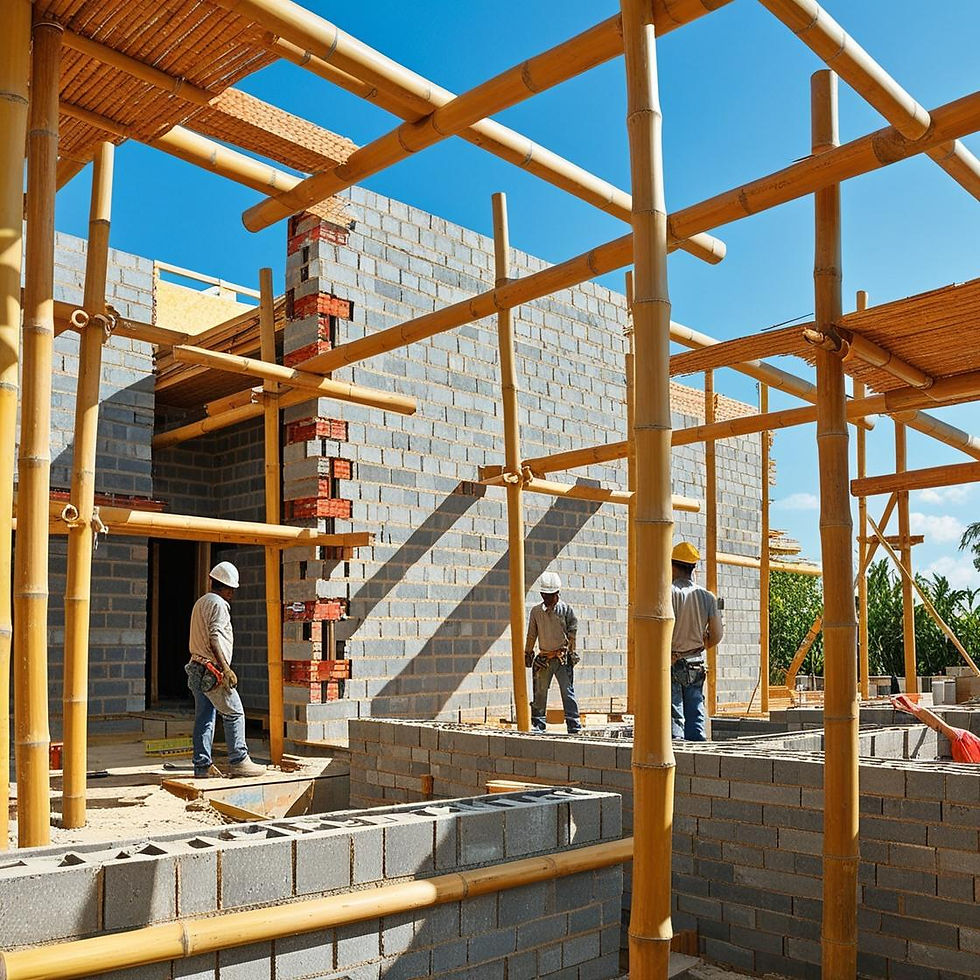
Use Locally Sourced Materials
Using locally available materials like bamboo, laterite stone, mud bricks, and fly ash bricks reduces transportation costs and minimizes the environmental impact. These materials are also well-suited to India's diverse climate conditions, providing better insulation and durability.

Energy efficient Design
Designing a house with energy efficiency in mind can significantly reduce electricity consumption. Passive cooling techniques like cross-ventilation, shaded verandas, and proper window placements can help maintain indoor temperatures without excessive air conditioning. Additionally, using solar panels for electricity and water heating further enhances energy efficiency.

Rainwater Harvesting Systems
Water scarcity is a growing issue in many parts of India. Installing a rainwater harvesting system helps collect and store rainwater for household use, reducing dependence on municipal supply and groundwater. This is a cost-effective and environmentally responsible solution for water management.
Waste Management and Recycling
Sustainable construction includes efficient waste management practices. Reusing construction debris, incorporating recycled materials, and reducing unnecessary waste during construction can help lower costs and reduce landfill waste. Additionally, composting organic waste and setting up a greywater recycling system can further enhance sustainability.

Green Roofing and Landscaping
A green roof or rooftop garden helps in temperature regulation by providing natural insulation, reducing the need for artificial cooling. Planting native trees and shrubs around the house can improve air quality, provide shade, and support biodiversity. Using permeable paving solutions also helps in rainwater absorption and reduces water runoff.

Eco-friendly paints and finishes
Conventional paints and finishes release harmful volatile organic compounds (VOCs) that affect indoor air quality. Opting for low-VOC or natural paints made from lime, clay, or plant-based ingredients helps create a healthier living environment.
Energy efficient appliances and lighting
Switching to LED lighting and investing in energy-efficient appliances with high BEE (Bureau of Energy Efficiency) ratings can significantly reduce electricity consumption. Smart home automation, motion-sensor lights, and programmable thermostats further optimize energy use.
Conclusion
Building a sustainable home in India is not just beneficial for the environment but also for long-term cost savings and healthier living. By incorporating locally sourced materials, energy-efficient designs, water conservation techniques, and eco-friendly finishes, homeowners can contribute to a greener future while enjoying a comfortable and modern living space.
Looking to build a sustainable home? Craftslab Interiors specializes in eco-friendly designs that blend aesthetics with sustainability. Contact us today to transform your dream home into a green paradise!


Comments